Showing posts with label Culture. Show all posts

Wednesday, 15 June 2016

PHOTOS: Ooni of Ife, Oba Ogunwusi recognized by US lawmakers at the House Of Reps in Washington

Ooni of Ife, Oba Ogunwusi recognized by US lawmakers
The Ooni of Ife, Oba Adeyeye Enitan Ogunwusi (Ojaja II) who is presently in the U.S continues to receive recognition from the people of United States.

The Ooni paid a visit to the House of Representatives in Washington D.C in the United States yesterday where he gave a speech relating to African (Yoruba) culture in front of the full house.

Monday, 13 June 2016

PHOTOS: Ooni of Ife, Oba Adeyeye Ogunwusi at 41st Odunde Festival in Philadelphia, USA

Ooni of Ife, Oba Adeyeye Ogunwusi at 41st Odunde Festival in Philadelphia, USA
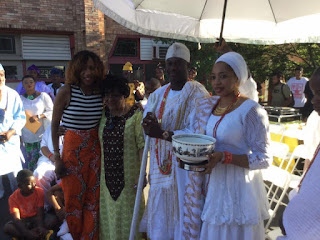
Ooni of Ife, Oba Adeyeye Ogunwusi, Ojaja II was at the 41st Odunde Festival in Philadelphia, USA yesterday June 12.

Odunde was created in 1975 by Lois Fernandez and Ruth Arthur. The festival attracts over 500,000 people annually and is the largest African American street festivals held in the country.

Saturday, 11 June 2016

U.S. President to honour Ooni of Ife, Oba Adeyeye Ogunwusi as New York city declares Yoruba Day

Ooni of Ife, Oba Adeyeye Ogunwusi in New York
The Ooni of Ife, Oba Adeyeye Ogunwusi, Ojaja II, was on Friday hosted by the indigenes of Ile-Ife, Osun State, resident in the United States.

The monarch, with his entourage, was received at the J.F. Kennedy Airport, New York, by leaders of Ife indigenes and other Nigerians in the US on Thursday.

Thursday, 9 June 2016

Oba of Benin: Crown Prince Eheneden Erediauwa concludes funeral rites for Oba Erediauwa

Crown Prince Eheneden concludes funeral rites
Crown Prince and Heir apparent to Benin Kingdom, Eheneden Erediauwa on Wednesday concluded the burial rites of Omo N’Oba N’Edo Uku Akpolokpolo Oba Erediauwa.

The burial rites, which lasted for 15 days as announced by the Iyase (Prime minister) of Benin Kingdom, Chief Sam Igbe began on May 25, and was rounded up on Wednesday morning.

Saturday, 4 June 2016

Oba of Benin’s Funeral Rites: Traditional Council bans Benin residents from cooking with fire

Late Oba of Benin, Omo N’Oba N’Edo, Uku Akpolokpolo Erediauwa
The Benin Traditional Council has directed all residents of the city not to cook with fire or any other process that generates heat on Sunday.

The directive is part of the funeral rites scheduled to mark the transition of the Oba of Benin, Omo N’Oba N’Edo, Uku Akpolokpolo Erediauwa, as well as one of the activities leading to the coronation of a new monarch.

Friday, 3 June 2016

Oba of Benin: Crown Prince Eheneden Erediauwa performs Ukpukpe rites (PHOTOS)

Crown Prince Eheneden Erediauwa performs Ukpukpe rites
The burial rites for the late ‎Oba of Benin, Oba Erediauwa, continues on Thursday morning with the Crown Prince and Edaiken n’Uselu, Eheneden Erediauwa, performing the Ukpukpe rites.

Also present at the ceremony which was held at the Ugha Ozolua Grounds, inside the Benin Palace, were other children of the departed Monarch and palace chiefs.

Tuesday, 31 May 2016

Kebbi State Govt to revive Argungu International Fishing Festival

Argungu International Fishing Festival
Kebbi government on Sunday promised to revive the popular Argungu International Fishing and Cultural Festival, last held seven years ago.

Gov Atiku Bagudu made the pledge in Birnin Kebbi when he addressed a town hall meeting as part of activities marking his first year in office.

Wednesday, 25 May 2016

Edo State Govt withdraws letter approving new Oba of Benin

Crown Prince Eheneden Erediauwa
The Edo State Government has withdrawn a letter earlier issued on the Oba of Benin, saying it was issued in error.

In a retraction signed by the Secretary to State Government, Julius Ihonvbere, dated May 25, 2016, the government said: “In deference to the revered age-long tradition and respect for the sensibilities of the people of the great Benin Kingdom, the Government of Edo State hereby withdraws a letter issued on 24th May 2016 entitled: “Appointment of His Royal Highness Edaiken N’Uselu, Crown Prince Eheneden Erediauwa as the Oba of Benin”

Thursday, 19 May 2016

France returns stolen Nok Terracotta artifact to Nigeria

France returns stolen Nok Terracotta artifact to Nigeria
France has officially presented to Nigeria the Nok Terracotta artifact that was repatriated after it was intercepted in France while in transit from Togo to the United States in 2008.

French Ambassador to Nigeria Denys Gauer officially presented the artifact, a Terracotta figurative sculpture, to the Minister of Information and Culture, Alhaji Lai Mohammed, at a ceremony to mark the 2016 International Museum Day in Abuja wednesday.

Tuesday, 29 December 2015

PHOTOS: Calabar Carnival 2015

Gov. Ben Ayade of Cross River, has described the annual Calabar Carnival as the “largest street party in Africa.’’

The governor, who made the remark on Monday in Calabar at the grand finale of the 2015 carnival, noted that the festival is unique in promoting talents and unity among Nigerians.

Ayade pointed out that apart from promoting talents and creativity, the carnival had united the people of Cross River and other Nigerians.

Sunday, 13 December 2015

PHOTOS: Coronation of 20th Olu of Warri, Ogiame Kenwoli I

Coronation of 20th Olu of Warri, Ogiame Kenwoli I
Olu-designate, Prince Godfrey Kenwoli Emiko, was on Saturday at Ode Itsekiri (Big Warri) crowned as the 20th Olu of Warri and assumed the royal title of ‘Ogiame Kenwoli’.

The Onolaja of Ijakpa and head of the Ologbosere family crowned the new Itsekiri king, placing the 404-year old diamond crown on prince Godfrey Emiko’s head.

Ethnic Division in Nigeria

Ethnic Groups in Nigeria
Like most other African countries, the British grouped people together for governance without respect for their religious, linguistic, and ethnic differences.

Nigeria, which gained independence from the United Kingdom in 1960, had at that time a population of 60 million people consisting of nearly 300 differing ethnic and cultural groups.

More than fifty years earlier, the United Kingdom had carved an area out of West Africa containing hundreds of different ethnic groups and unified it, calling it Nigeria. Although the area contained many different groups, the three predominant groups were the Igbo, which formed between 60–70% of the population in the southeast; the Hausa-Fulani, which formed about 65% of the peoples in the northern part of the territory; and the Yoruba, which formed about 75% of the population in the southwestern part. Although these groups have their own homelands, by the 1960s they were dispersed across Nigeria, with all three ethnic groups represented substantially in major cities.

Monday, 7 December 2015

PHOTOS: Coronation of Ooni of Ife, Oba Adeyeye Enitan Ogunwusi, Ojaja II

Coronation of new Ooni of Ife, Oba Adeyeye Enitan Ogunwusi
The new Ooni of Ife was crowned in Ile Ife today.

The coronation ceremony and official presentation of staff of office was attended by thousands of people including Nigeria’s Vice President Yemi Osinbajo, Governor Ambode,Governor Amosun, Former Governor of Lagos State Bola Tinubu, Olu of Warri, Sultan of Sokoto, Governor Rauf Aregbesola and Former President of Nigeria Olusegun Obasanjo.

40 year old Adeyeye Enitan Ogunwusi, is now His Imperial Majesty, Oba Adeyeye Enitan Ogunwusi.

The Ooni of Ife is considered one of most influential monarch in Nigeria and as the most influential monarch amongst Yoruba people.


more pictures after the break...

Tuesday, 1 December 2015

Queen Elizabeth, President Buhari, VP Osinbajo, 20 Governors and others to attend coronation of new Ooni of Ife

Ooni of Ife, Oba Adeyeye Enitan Ogunwusi Ojaja II
Her Majesty the Queen of England, Elizabeth Alexandra; President Muhammadu Buhari; Vice President, Prof. Yemi Osinbajo (SAN); and governors from at least 20 states, ministers and other dignitaries are expected to attend the coronation of the new Ooni of Ife, Oba Adeyeye Enitan Ogunwusi Ojaja II.

The Chairman, Media Committee of the coronation, Mr. Biyi Odunlade, said this at a press conference that started a series of activities lined up for the coronation scheduled to hold on December 7.

Monday, 23 November 2015

PHOTOS: Ooni of ife, Oba Enitan Ogunwusi returns from ilofi; ...presented with Aare crown

Ooni of ife, Oba Enitan Ogunwusi presented with Aare crown

The New Ooni of ife Oba Enitan Ogunwusi was presented with the Aare crown after he returned last night from 'Ilofi', where he had been in seclusion.

King emerged from the forest with the traditional crown called Aare, which is believed to be given to the new Ooni by the gods as a symbol that he has fulfill all traditional rites.

Sunday, 1 November 2015

Ohanaeze backs Deji of Akure for banning Eze Ndigbo title

Deji of Akure, Oba Ogunlade Aladetoyinbo
An Igbo socio-cultural group, Ohanaeze Ndigbo, has backed the Deji of Akure, Oba Ogunlade Aladetoyinbo, for banning the Eze Ndigbo title within the state capital.

Specifically, the group said the title was not recognised by traditional rulers in the South-East and added that it was wrong of any Igbo man to parade himself as the Eze Ndigbo in the South-West.

Monday, 26 October 2015

VIDEO: Inauguration of Igbo Village in Virginia, USA

Igbo Village in Virginia, USA
The nostalgic and magically surreal ceremony when Igbo Village was inaugurated at the Frontier Culture Museum, Staunton, Virginia, amidst a solemn ritual that symbolically reconnected the African American with his ancestral homeland.


Beginning in the early 1700s, Virginia tobacco planters imported increasing numbers of captive Africans to work their plantations. The shift from white indentured servants to enslaved Africans in the colony’s tobacco economy had far-reaching repercussions. Race-based slavery soon became a central feature of life in Virginia, and Africans and their Virginia-born descendents would be treated as property, and denied the freedom and opportunities of white colonists.

Monday, 28 September 2015

Cultural Diversity in Nigeria: A Blessing or a Curse?

Cultural Diversity in Nigeria
Cultural diversity is a term commonly used to describe the society with people of different ethnic origins, which is manifested in their languages​​, the way they dress, art, and other traditional practices that are either similar or very different from each group.

These traditional practices are highly valued and maintained with great admiration among people of ethnic groups.

In Nigeria, for example, when it comes to dressing the Hausa/Fulani of the North is identified with the starch-ironed fez as a cap. In the western part of Nigeria, dominated by Yoruba ethnic group, people generally sew cap in a long style which neatly folded when worn on the head. On the other hand, in the eastern part of the country Igbo are known for their red cap, which is traditionally worn (but mostly) the title right. Other minority ethnic groups in the middle belt region of the TIV, Ngas, Ida, Nupe, etc., also have unique cultural attributes that help identify cultural roots, when they appear in public.

Friday, 25 September 2015

Cultural Diversity in Nigeria - Cultural Festivals

One thing you cannot take away from Nigeria is her affluently diverse cultural outlook. Saying its rich and highly-varied would be saying the least. From East to West, North to South.

Nigeria’s rich heritage speak volumes of the versatility and industry of her people. Nigeria indeed, is a paradise on earth!

Monday, 14 September 2015

Tribes and Ethnic Groups in Nigeria

Nigerian Tribes
Nigeria is Africa's most populous country and has one of the largest aggregation of ethnic groups in Africa. There are more than 300 Nigerian tribes and among the largest include Hausa-Fulani, Yoruba, Igbo, Ijaw, Kanuri, Annang, Tiv, Ibibio, Etsako and Efik.

While most people are very much aware of the three major tribes in Nigeria; Hausa Igbo and Yoruba, there are countless number of other that are yet in obscurity

Other Nigerian tribes apart from the ones listed above constitute a smaller percentage of the total number of people from all the tribes in Nigeria. Hausa, Yoruba and Igbo make up about 70% of the population of Nigeria.

These Nigeran tribes have different cultures carried on by their people thereby contribution to the immense cultural diversity seen in the country.